Money worries are loud. They follow you into the kitchen, the school run and bedtime. I don't believe the fix is a complicated system. For me it's a handful of small habits that make each month feel calmer and more in my control.
1. Plan the month before it starts
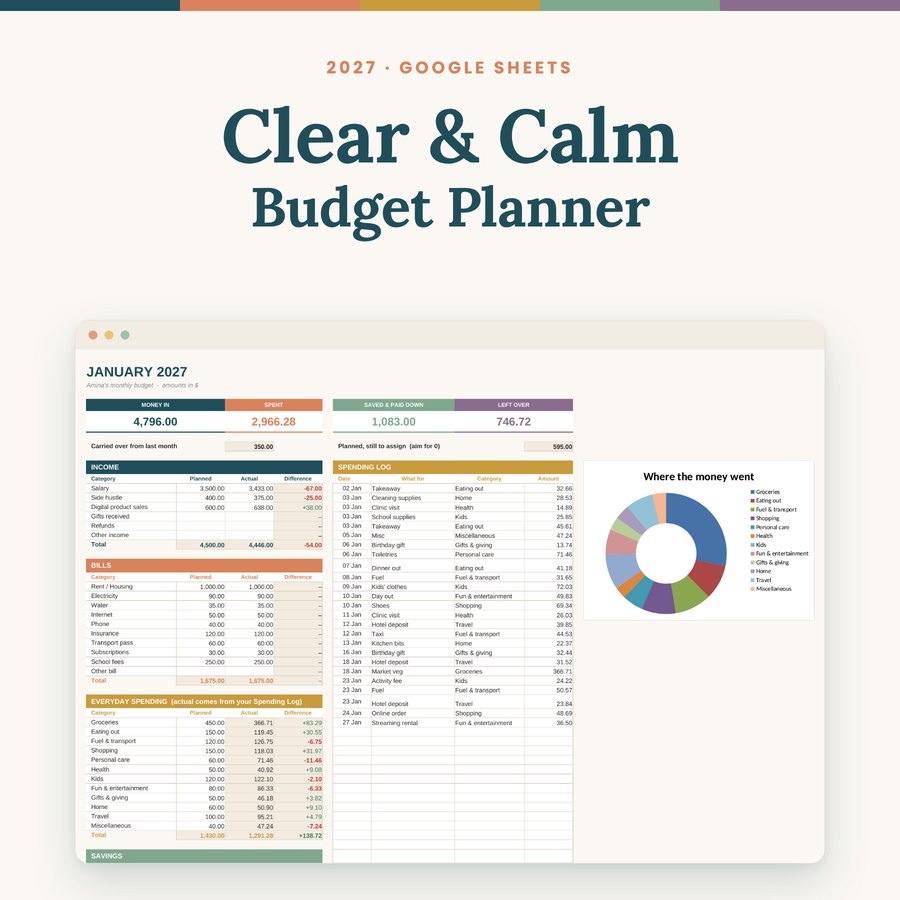
Ten minutes at the end of the month is enough. Write down the money you expect to come in, then the bills you already know about. Seeing it all before the month begins takes away most of the surprises.
2. Give every coin a job
Once bills are covered, decide where the rest goes: food, transport, savings, family, a little fun. When income minus all those jobs reaches zero, nothing is left floating around to disappear. This is called zero-based budgeting, and it's simpler than it sounds.
3. Write spending down the same day
Not at the end of the month, when you've forgotten half of it. A quick note on your phone or a line in a spreadsheet takes seconds. The small amounts, like snacks, taxis and top-ups, are usually where money quietly slips away.
4. Save for the things you already know are coming
School fees, birthdays, holidays and money sent home to family aren't really surprises. Putting a little aside for each one every month means they arrive as planned instead of as a shock.
5. Check in once a month, kindly
At the end of the month, look at what you planned against what really happened. No guilt. Just notice what worked and adjust next month's plan. Progress over perfection.
These are habits that help me at home. They're not financial advice, so for big decisions, speak to a qualified professional.